Introduction
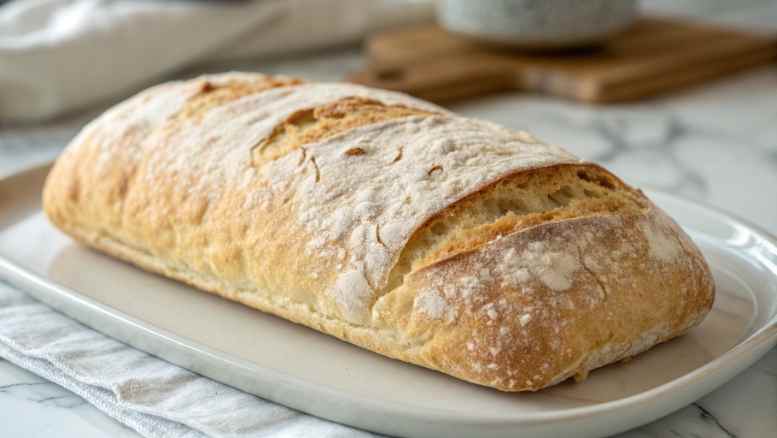
Best Ciabatta Bread Recipe delivers a rustic Italian classic with a crisp, crackly crust and an airy, hole-filled crumb. Known for its wet dough and light interior, ciabatta is perfect for sandwiches, panini, or tearing and dipping into olive oil. With simple ingredients and the right technique, this recipe produces bakery-quality ciabatta at home—light, chewy, and full of character.
Why you’ll love this recipe
- Open, airy crumb with classic holes
- Crisp crust and chewy interior
- Simple ingredients, authentic results
- Perfect for sandwiches and dipping
- No kneading machine required
Ingredients (makes 2 loaves)
Dough
- 3½ cups bread flour
- 1½ cups warm water (about 105°F / 40°C)
- 2¼ tsp active dry yeast
- 2 tbsp olive oil
- 1½ tsp salt
For Shaping
-
Extra flour for dusting
Essential Tools and Equipment
- Large mixing bowl
- Wooden spoon or dough whisk
- Plastic wrap or towel
- Bench scraper or spatula
- Baking sheet
- Parchment paper
Step-by-step process (detailed)
1. Activate the yeast
In a large bowl, combine warm water and yeast. Stir briefly and let sit 5–10 minutes until foamy. This confirms the yeast is active and ready.
2. Mix the dough
Add olive oil and salt to the yeast mixture. Stir in bread flour gradually until a sticky, shaggy dough forms. The dough will be very wet—this is essential for ciabatta’s open crumb.
3. First rise
Cover the bowl with plastic wrap or a towel. Let the dough rise at room temperature for 1½–2 hours, until doubled in size and bubbly on the surface.
4. Stretch and fold
With wet hands or a spatula, gently stretch one side of the dough up and fold it over itself. Rotate the bowl and repeat 3–4 times. This builds structure without kneading.
5. Second rise
Cover again and let rise 45–60 minutes until puffy and elastic. The dough should jiggle slightly when the bowl is shaken.
6. Shape gently
Generously flour a work surface. Turn the dough out carefully, preserving air bubbles. Divide into two rectangles using a bench scraper. Do not punch down.
7. Final rest
Transfer loaves to a parchment-lined baking sheet. Lightly dust with flour and rest 20–30 minutes while the oven preheats.
8. Bake hot
Preheat oven to 450°F (230°C). Bake ciabatta 20–25 minutes until golden brown with a hollow sound when tapped on the bottom.
9. Cool completely
Transfer to a wire rack and cool at least 30 minutes before slicing. Cooling finishes the crumb structure.
Mistakes to avoid
- Adding too much flour — dense bread
- Overhandling the dough — deflated crumb
- Skipping stretch-and-fold — weak structure
- Baking at low heat — pale crust
- Cutting while hot — gummy interior
Variations of the Best Ciabatta Bread Recipe
- Whole Wheat — replace 1 cup of flour with whole wheat
- Garlic Ciabatta — fold roasted garlic into the dough
- Olive Ciabatta — add chopped olives before final rise
- Rosemary — sprinkle rosemary and sea salt on top
- Mini Ciabatta Rolls — divide into smaller portions
Tips for storage & make-ahead
- Store at room temperature up to 2 days
- Freeze baked loaves up to 2 months
- Refresh in oven at 350°F for 5–8 minutes
- Best enjoyed the day it’s baked
Frequently Asked Questions
Why is ciabatta dough so wet?
High hydration creates the signature open crumb.
Can I use all-purpose flour?
Yes, but bread flour gives better chew and structure.
Do I need a stand mixer?
No—hand mixing works perfectly.
How do I get bigger holes?
Handle gently and avoid adding excess flour.
Conclusion
The best ciabatta bread recipe shows that rustic, bakery-style bread is achievable at home with patience and proper technique. With its crisp crust and airy interior, ciabatta elevates everything from sandwiches to simple olive oil dipping. Once you master this method, homemade ciabatta becomes a rewarding staple you’ll return to again and again.
Best Ciabatta Bread Recipe
Ingredients
- Dough:
- 3½ cups bread flour
- 1½ cups warm water about 105°F / 40°C
- 2¼ tsp active dry yeast
- 2 tbsp olive oil
- 1½ tsp salt
- For Shaping:
- Extra flour for dusting
Instructions
- Activate yeast and mix wet dough.
- Let rise until bubbly and doubled.
- Stretch and fold, then rise again.
- Shape gently and rest.
- Bake hot until golden and hollow-sounding.
Notes
- Dough should be sticky
- Handle gently to preserve air
- High heat is key
- Cool fully before slicing